Chanderi Saree: What Makes It Special and How to Style It
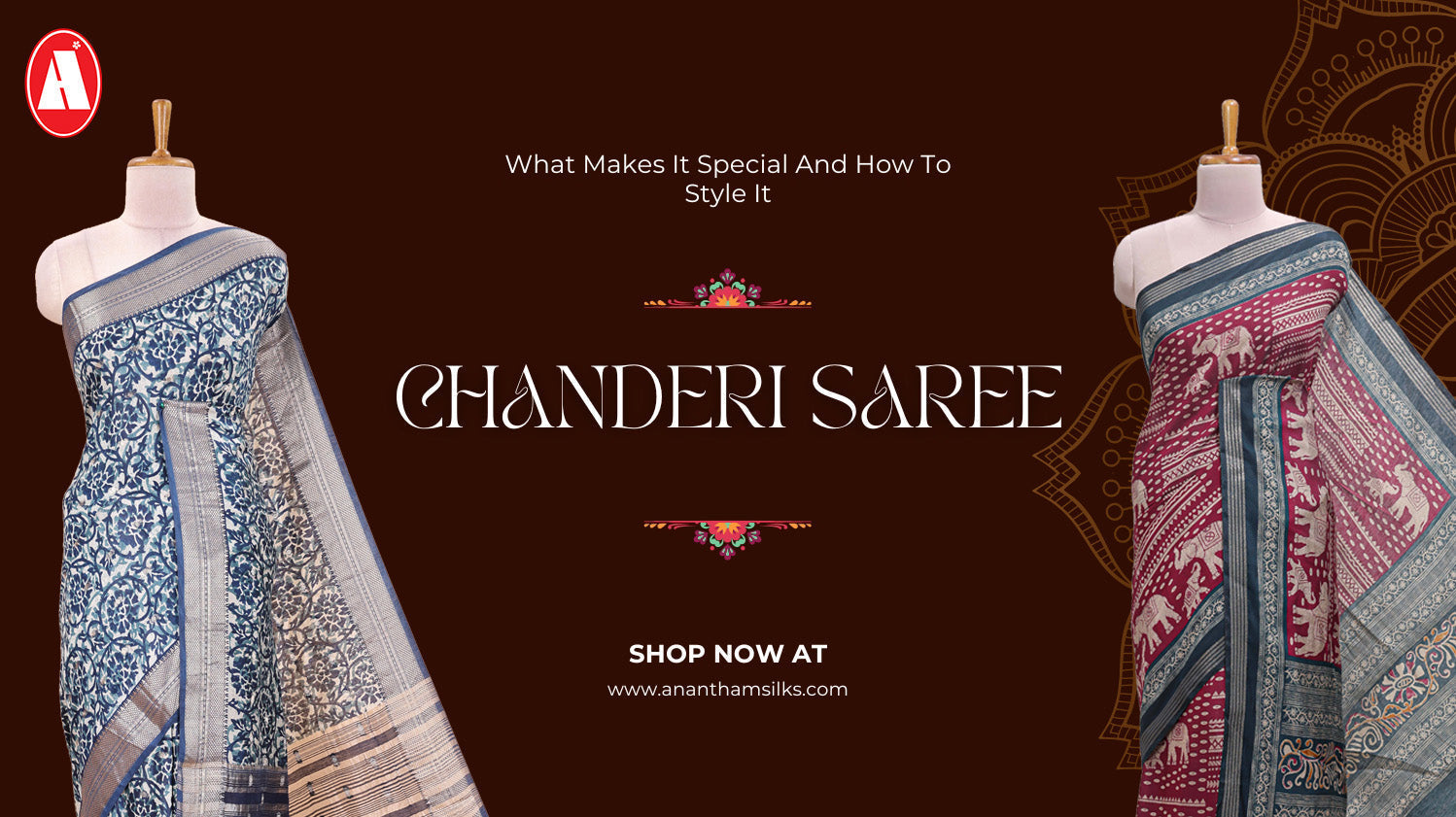
You can typically identify when a person is shopping for Chanderi sarees for the first time. They always hold the saree up to the light. The translucence of the saree is often unexpected for first-time customers, causing them to purchase a saree despite previous intentions not to buy. This Chanderi saree complete guide is for anyone still asking what a Chanderi saree is and why it is so popular, and the short answer is that nothing else feels quite like it in this price range.
What is Chanderi Fabric? Origin and Heritage
Chanderi is a small town in the Ashoknagar district, Madhya Pradesh. Not easy to find on a map. But weavers there have been at their pit-looms since the 2nd century BCE, and Malwa sultans commissioned the fabric before the Mughal court ever wore it.
What is Chanderi fabric, and where does it come from, is a question the weave itself answers. Threads are spaced at deliberate gaps, warp and weft both, to let light pass through. That gap creates the shimmer. No synthetic does this the same way. The Chanderi Madhya Pradesh weaving tradition has had over two thousand years to get it right, and it shows. The fabric also holds a GI tag, so only cloth woven in Chanderi town can legally use the name.
Types of Chanderi Sarees: Silk, Cotton, and Cotton-Silk
The Chanderi silk saree vs Chanderi cotton saree difference trips most buyers up. Both look similar in photographs.
Type Sheen Best For Pure Chanderi Silk Saree Heaviest sheen Formal | Premium gifting Price Range Rs. 5,000 - 15,000 Chanderi Cotton Saree Chanderi Cotton-Silk (Blended) Mul Chanderi Matte finish Silk sheen + cotton comfort Ultra-fine sheer | Very Summer | Daily wear Most occasions Rs. 1,500 - 4,000 Rs. 2,000 - 6,000 Light festive events Rs. 2,500 - 7,000
Chanderi cotton silk saree characteristics put it in the sweet spot: silk's sheen, cotton's breathability, a price that does not require much justification. Most buyers at Anantham Silks land here.
What Makes Chanderi Sarees Special: Motifs and Weaving Techniques
Look at the border of a real Chanderi. Not quickly. Properly. The zari is not stuck on, not printed, not ironed on after the fact. It is woven in, thread by thread, on a pit-loom, by one person. One weaver. One to two sarees a week, at most.
Chanderi saree traditional motifs and patterns range from peacock (mayur), flower vines (bel-boota), and coin motifs (ashrafi), to temple borders, and are all built into the fabric at that pit-loom stage. And because thread spacing creates air pockets within the weave, the fabric stays cooler than its zari content suggests. That part surprises most people.
Anantham's Chanderi Kalamkari range goes a step further, adding block-printed folk art post-weaving. Two craft traditions, one saree. No competitor currently offers this combination.
How to Identify an Authentic Chanderi Saree
Want to know how to check an original Chanderi saree? Run these five tests:
● Transparency | Hold to light | Real Chanderi shows translucent shimmer through the body, not just at the border
● Zari | Press the border between fingers | Woven zari has texture | Printed zari sits flat and eventually peels
● Feel | Run through fingers slowly | Crisp but smooth together | Synthetics feel either stiff or limp, rarely both
● Weave variation | Look closely at the body | Small irregularities are handloom markers | Perfect uniformity means machine-made
● Burn test | Pull one edge thread | Genuine silk or cotton burns to fine ash with a hair smell | Synthetic melts into a hard bead
A Handloom Mark or GI tag on the packaging cuts the process short. The authentic Chanderi saree test above is for when that label is missing, or you are buying from an unfamiliar source.
How to Style a Chanderi Saree for Every Occasion
How to style a Chanderi saree for the office: restraint is the whole point. Pastel cotton Chanderi, fitted blouse in a contrasting shade, nothing that pulls focus from the fabric. Chanderi silk saree with zari border styling works on opposite logic. The border already makes the statement. Pair it with a matching zari blouse and leave everything else simple.
● Office - Chanderi cotton in beige, dusty rose, grey-green | Simple V-neck or boat neck blouse - Small earrings only
● Wedding Guest - Chanderi silk in jewel tones | Temple jewellery or pearl set | Embroidered blouse
● Festive or Puja - Zari border in red, yellow, or green | Gold jewellery | Keep it traditional
● Casual - Printed Chanderi cotton | Lightweight accessories | Flat sandals
Anantham's Chanderi Kalamkari sarees are the ones most customers walk past and then come back for. Oxidised silver jewellery, minimal accessories, and the print does the rest.
Chanderi Saree Price Guide
Here's a look at Chanderi saree price range in India 2026:
● Machine-made Chanderi print | Rs. 500 - 1,500
● Chanderi cotton handloom | Rs. 1,500 - 4,000
● Cotton-silk blend | Rs. 2,000 - 6,000
● Pure Chanderi silk saree handloom | Rs. 5,000 - 15,000
● Designer or embroidered Chanderi saree | Rs. 8,000 - 30,000
Cotton-silk blend is where the Chanderi saree price makes the most practical sense. It presents like silk in photos. It's a great buy since it wears better than pure silk in the heat.
Chanderi Saree Care Instructions
How to wash and store a Chanderi saree is genuinely simple.
● Washing: Hand wash in cold water with a mild detergent.
● Drying: Avoid Hanging. Dry Flat in the Shade.
● Ironing: Medium Heat on reverse. Cushion with a cotton cloth.
● Storage: Fold with a muslin cloth. Avoid plastic bags. Place neem leaves among the folds to deter moths.