Half Saree Guide: Styles, Designs, and How to Wear a Half Saree
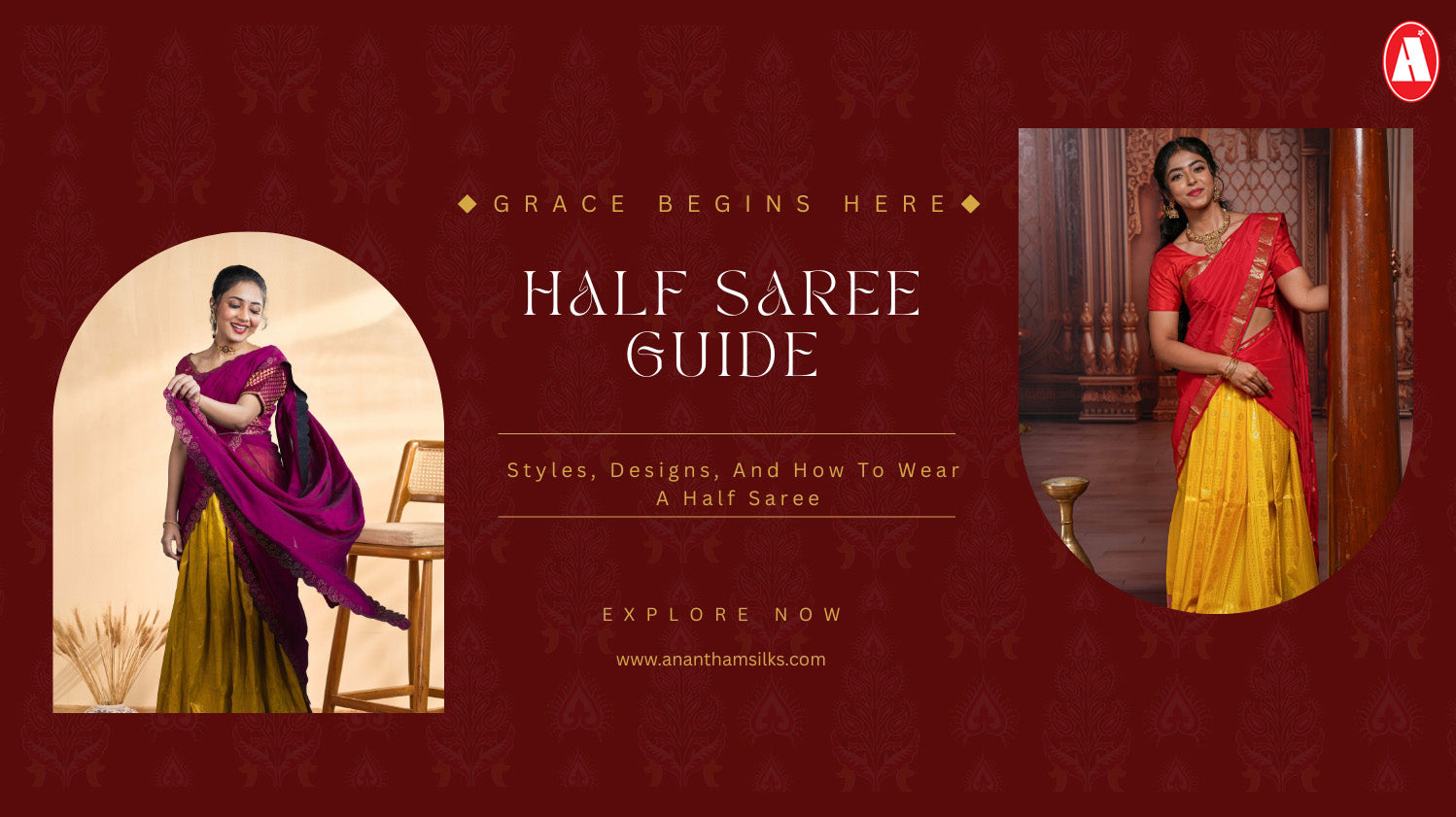
Ask any South Indian mother, and she will tell you the same thing. The day her daughter wore a half saree for the first time is one she remembers clearly. The garment carries that kind of weight.
In Tamil Nadu, it is called the pavadai daavani, and in Telugu, the langa voni. It is a South Indian tradition that signifies a variety of occasions. This special dress can be seen in every South Indian Wedding and in gatherings all throughout India.
This complete guide to half sarees for South Indian women covers everything, from the information about the three fabrics to the various types of half sarees to designs and the often overlooked dhavani set.
What is a Half Saree? (Pavadai Daavani / Langa Voni Explained)
So what does a half saree actually mean in South India? It is three fabrics, to be precise. A long skirt called the langa or pavadai, a fitted blouse, and a dupatta called the daavani. The half saree gets its name because the daavani is the only part that is draped and is adjustable. The skirt and blouse remain fixed.
The names vary in South India depending on your roots. In Tamil Nadu, it is called Pavadai Daavani. And if you travel north to Andhra Pradesh, it is called Langa Voni, while Karnataka borrows a little bit from Tamil Nadu and Andhra to call it Langa Davani. One attire, many names according to mother tongue.
Types of Half Sarees
The traditional half saree types India offers suit different occasions and preferences.
Traditional Silk Half Saree (Dola Silk): Rich zari, vibrant colours | Ideal for weddings, arangetrams, and puberty ceremonies.
Cotton Half Saree: Lightweight and breathable | Best for summer, temple visits, and school functions.
Art Silk or Semi-Silk Half Saree: Good looking yet affordable | Perfect for a puja or cultural celebration.
Lehenga Style Half Saree: A flared skirt and a draped daavani | Great for receptions and sangeet parties.
Printed or Bandhani Half Saree: Modern prints with an old style | Good for the younger generation.
Embroidered / Stone-Work Half Saree: Intricate embellishments | Perfect for bridal ceremonies and receptions.
Half Saree Designs — Traditional to Modern
Half saree designs now diversify beyond the old contrast-border-matching-blouse design. In Tamil Nadu weddings and cultural events, half saree models for girls have also seen diversification. Hence, we suggest that you familiarize yourself with these designs before going shopping.
At puberty and temple ceremonies, the classic matching bordered skirt and blouse remain the preference. In these events, nothing else comes close. However, for the wedding celebrations, dual-tone bordered skirts and daavanis have become fashionable, usually from color blocking that flows into designs of traditional garments.
For daavanis, a plain skirt paired with a printed daavani has become the choice for many Gen Z women. Printed daavanis and plain skirts look exquisite, as the print does all the work. For formal ceremonies, half sarees made from zari with a full gold border, along with temple jewellery, are a popular choice. On the other hand, lighter half sarees made in pastel color designs of lavender, blush pink, lemon yellow, and sage green make a popular choice for sangeet and mehendi ceremonies.
How to Wear a Half Saree — Step-by-Step
Draping Guide Draping a half saree can be easy with these instructions:
Step 1: Fasten the petticoat. | Ensure the langa is at the waist.
Step 2: Put the blouse on. | Ensure the blouse fits at the waist.
Step 3: Pleat the daavani. | Make 5-6 pleats and tuck.
Step 4: Drape across the body. | Throw the daavani over the left shoulder and secure.
Step 5: Set the pallu. | Drape the daavani down the back and adjust the front. If you're learning how to wear pavadai daavani for beginners, the lehenga-style half saree is the way to go, as the daavani is simply pinned over the shoulder instead of being fully pleated.
Half Saree Colour Combinations
The best half saree colour combinations for South Indian weddings balance tradition with contrast. A rich skirt, a complementary blouse, and coordinated daavani create a timeless look.
Bridal Classic:
Red skirt | Gold blouse | Cream daavani.
Wedding Guest: Peacock green skirt | Gold blouse | Pink daavani.
Pastel Trend: Pink with white and lavender | Powder blue with ivory and mint.
Reception: Navy blue | Silver blouse | Royal blue daavani.
Festive Wear: Yellow skirt | Green blouse | Orange daavani.
For half sarees for girls, pastel shades are ideal for school functions and stage performances. Jewel tones like burgundy, cobalt, and forest green suit fair skin, while mustard, rust, gold, and deep red beautifully complement medium and dusky skin tones.
Dhavani Set — The Ready-to-Drape Half Saree
Most people do not realise the Dhavani set is a separate category until they need to get a ten-year-old ready for a school event in fifteen minutes. The traditional half saree requires draping from scratch. The dhavani set comes partially pre-stitched or pre-pleated, so the daavani is already shaped for wearing. All that remains is putting it on and securing the shoulder drape. The result looks almost identical to a fully draped half saree. The dola silk dhavani set for girls is among the most searched options in this category, especially in Tamil Nadu and Kerala. Anantham Silks carries Dola Silk Dhavani sets across a range of border styles and colours to suit school functions, college day events, and morning pujas.